
 English
 中文简体
中文简体 русский
 日本語
日本語 Français
 Español
 عربى
عربىfr
Qu'est-ce qu'une presse à balles pour le carton ? Une usine de conditionnement générant deux tonnes de chutes de carton ondulé par ...
LIRE LA SUITE50 % d'économie de main-d'œuvre pour les rebuts. Coupeur concave pour système de fil pré-intégré à attache instantanée. Produit des balles carrées pour le stockage direct. Un incontournable pour les ateliers textiles.
TOUS
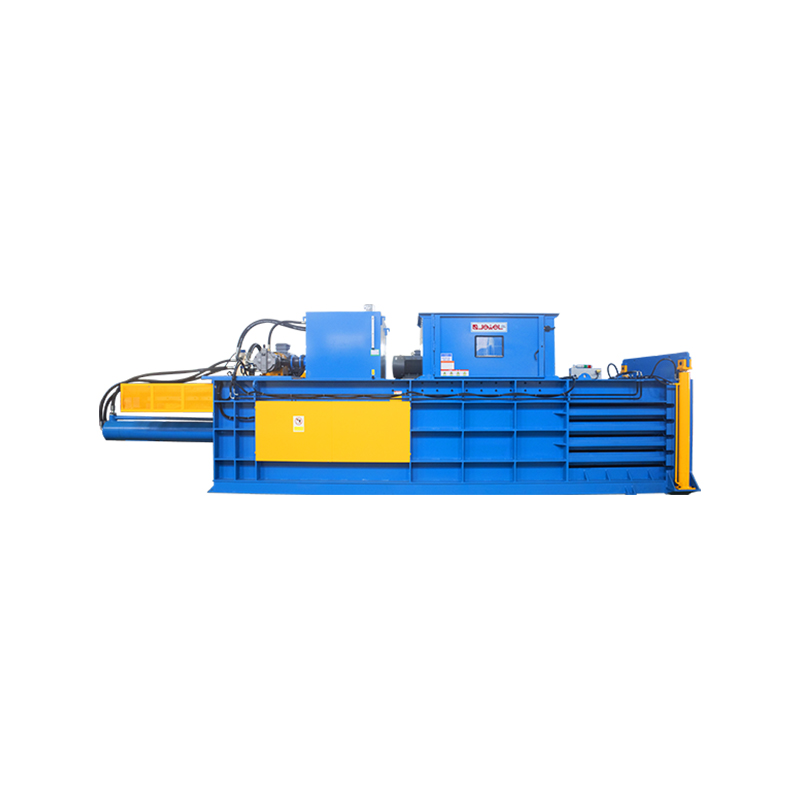
Champ d'application :
En savoir plus
Ajouter à la liste de souhaits
Ajouté √
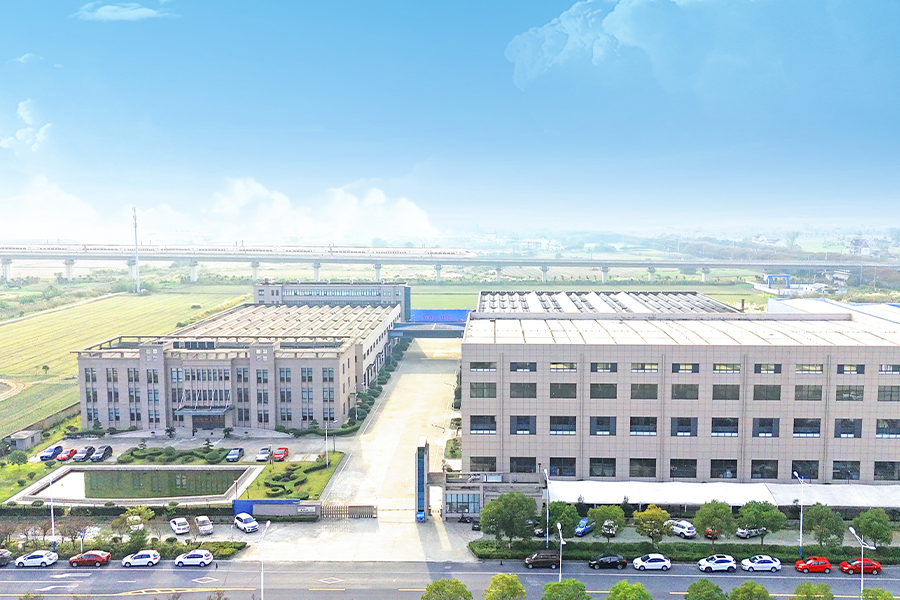
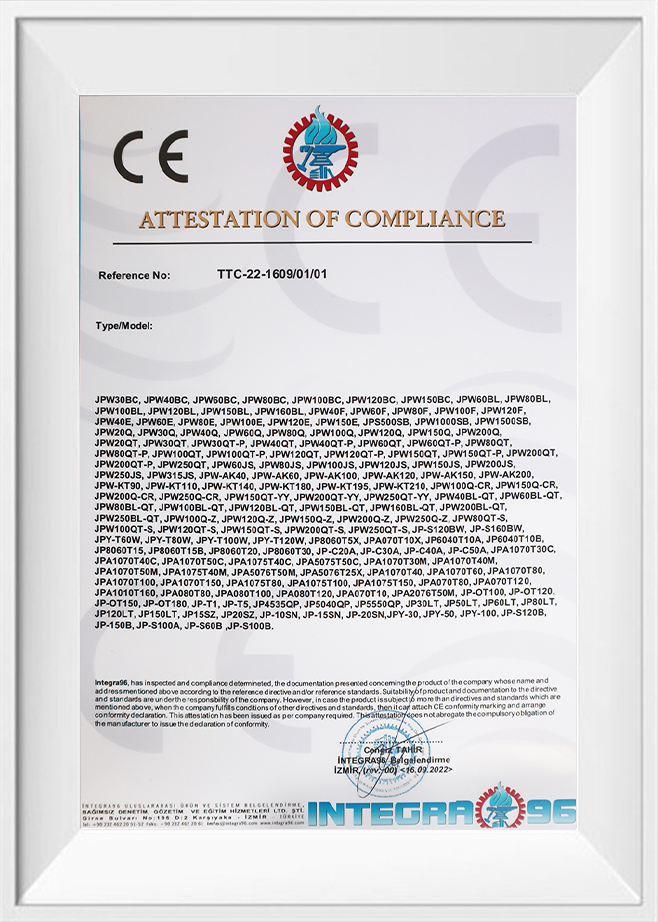
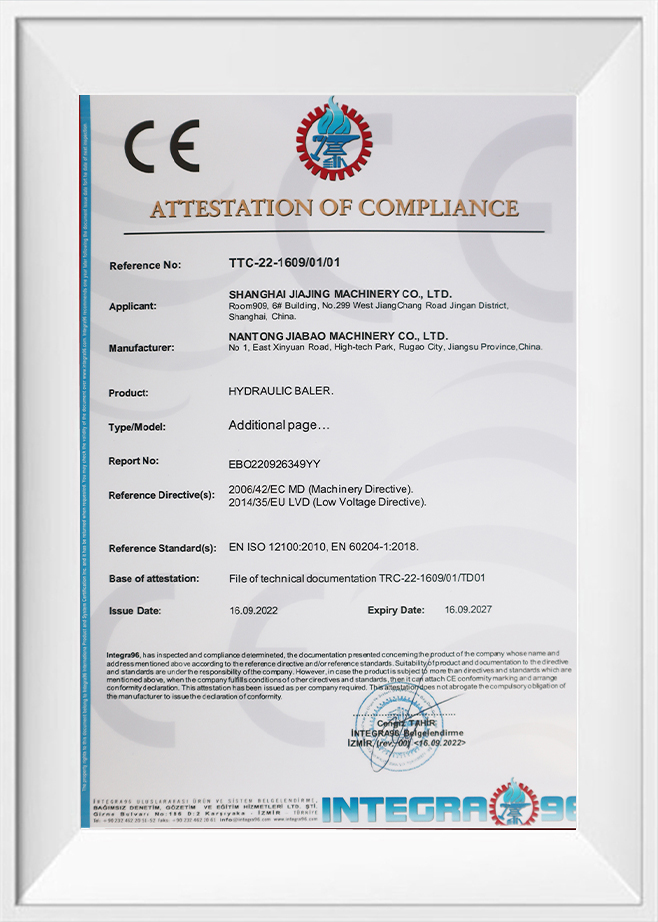
En tant que Presse à balles horizontale semi-automatique pour vêtements et textiles Fabricants et Presse à balles horizontale semi-automatique pour vêtements et textiles Fournisseurs, Shanghai Jewel Tech Co., Ltd., fondée en 2006 (la marque a été créée en 1995), se spécialise dans la recherche, le développement et la fabrication d'équipements de compression et de mise en balles écologiques et intelligents. Nous disposons d'une installation de production moderne de 50 000 mètres carrés et d'une équipe de plus de 200 professionnels.
Grâce à notre vaste expérience en fabrication, nous offrons à nos clients :
Machines de compression et de mise en balles semi-automatiques/automatiques. Systèmes intelligents d'élimination des déchets pour diverses industries. Systèmes automatiques de compression et d'emballage. Machines intégrées de broyage, compression et mise en balles. Solutions personnalisées pour l'industrie.
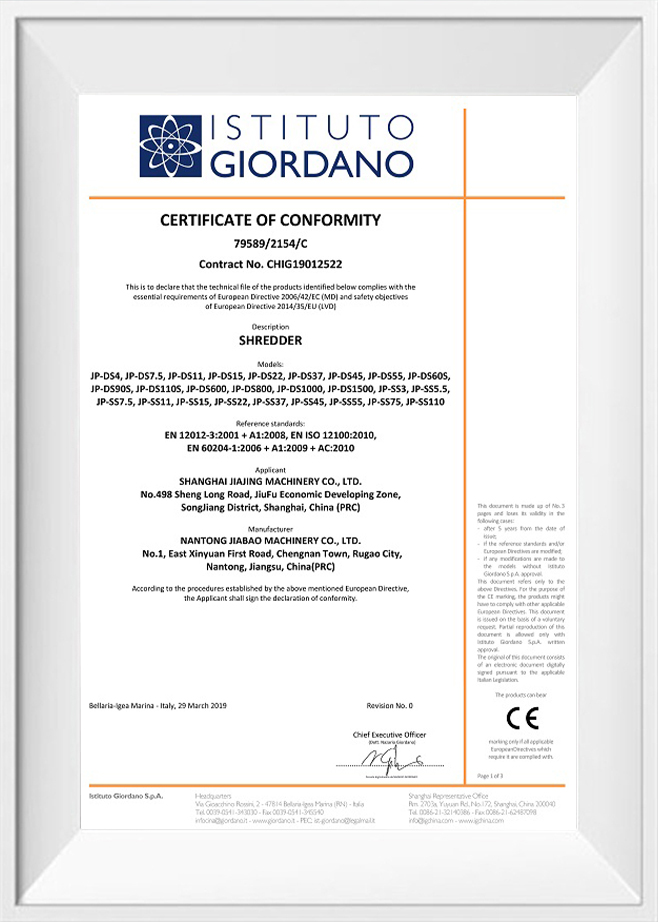
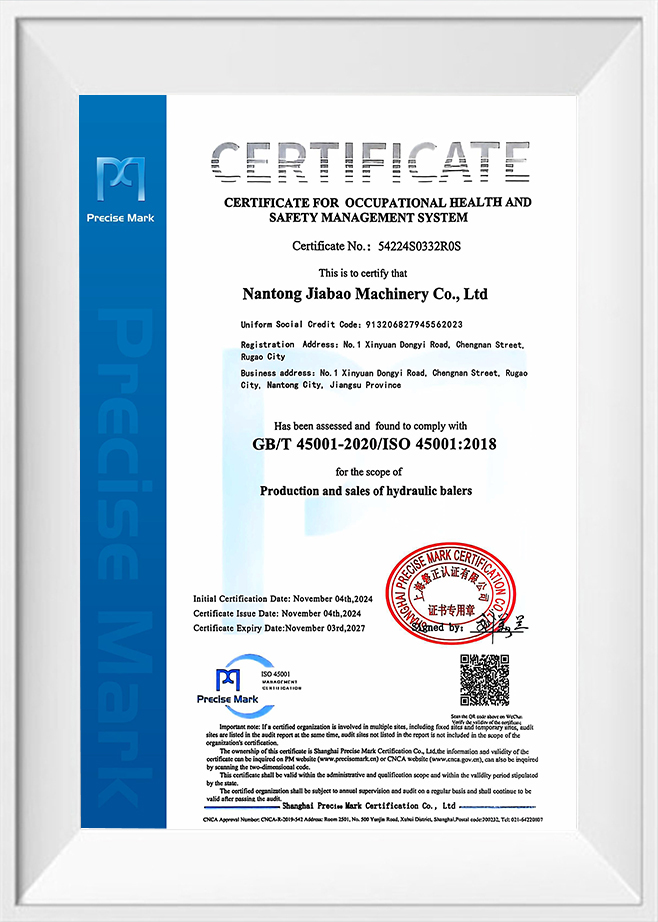
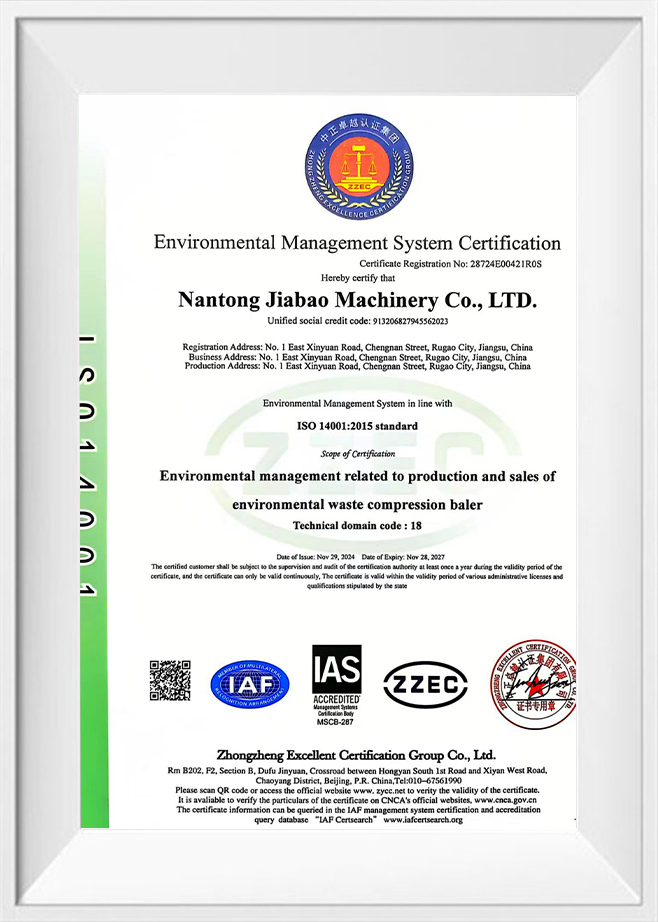
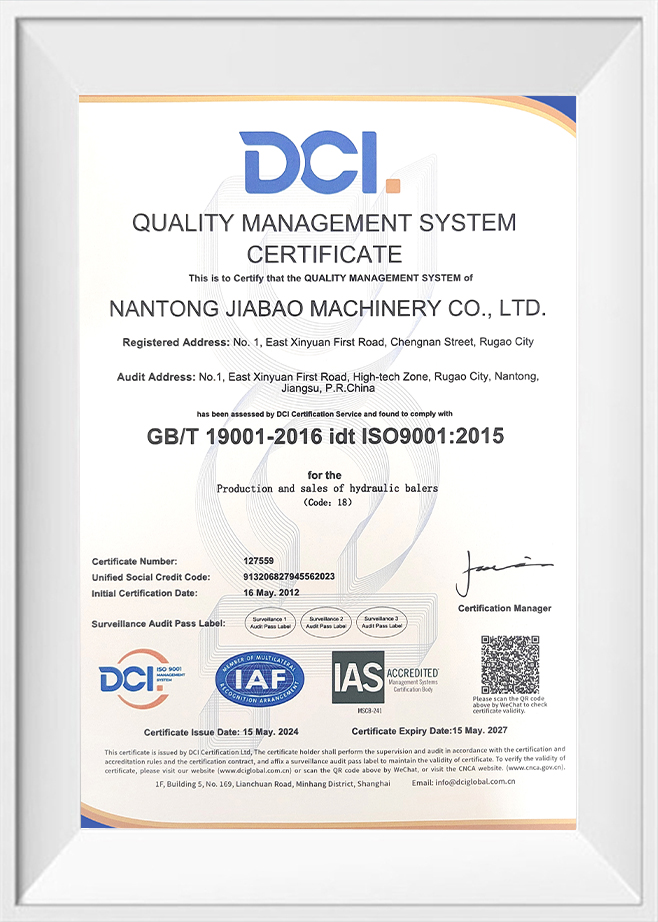
Qu'est-ce qu'une presse à balles pour le carton ? Une usine de conditionnement générant deux tonnes de chutes de carton ondulé par ...
LIRE LA SUITELa réponse courte d’abord Un responsable de production dans une usine d'emballage en carton ondulé m'a récemment montré deux photog...
LIRE LA SUITEPresses horizontales pour le compactage de gros volumes de matériaux : un aperçu technique Les usines de fabrication, les centres de distribution et...
LIRE LA SUITEUn bien conçu presse à balles fait plus que compresser les déchets : il change la façon dont une installation gère l'espace, la ma...
LIRE LA SUITEBale stability is a key factor in textile waste handling, as it directly affects storage efficiency, transportation safety, and downstream recycling processes. In textile recycling centers, garment factories, and logistics facilities, materials such as fabric scraps, used clothing, and mixed fibers are compressed into bales to reduce volume. However, textiles are often elastic, lightweight, and irregular in shape, which can make it challenging to maintain a consistent bale structure. A semi-auto horizontal textile baler must manage these characteristics through controlled compression, stable system performance, and proper operational practices. Shanghai Jewel Tech Co., Ltd., with extensive experience in intelligent compression equipment, designs systems that address these challenges through structural and hydraulic optimization.
Textile materials vary widely in composition, including cotton, polyester, blended fabrics, and synthetic fibers. These materials differ in elasticity, friction, and density, all of which influence how they behave during compression. Lightweight and flexible fabrics tend to trap air, while thicker materials resist compression initially but may hold shape more effectively once compacted. Mixed textile waste adds further complexity, as different materials respond differently within the same compression cycle. A semi-auto horizontal baler must apply consistent pressure to reduce air gaps and align fibers in a way that supports a stable bale structure.
Hydraulic pressure plays a central role in achieving bale stability. During compression, consistent pressure ensures that textile materials are compacted evenly across the chamber. If pressure fluctuates, some sections of the bale may remain loose, leading to uneven density and reduced structural integrity. Semi-auto horizontal balers rely on controlled hydraulic systems to maintain steady force throughout each cycle. Shanghai Jewel Tech Co., Ltd. integrates stable hydraulic designs that support uniform compression, helping to reduce internal voids and improve the overall cohesion of textile bales.
The compression cycle, including pressing time and pressure holding duration, influences how well textile materials settle into a compact form. Short or inconsistent cycles may not allow sufficient time for fibers to rearrange and release trapped air, resulting in less stable bales. Controlled cycle timing allows materials to gradually adjust under pressure, improving density distribution. In semi-automatic systems, operators can adjust cycle parameters based on material characteristics, providing flexibility in handling different textile types while maintaining bale consistency.
The design of the compression chamber affects how materials are distributed and compacted. A well-structured chamber with reinforced walls ensures that pressure is applied evenly across the material mass. Smooth internal surfaces reduce friction and prevent material sticking, which can otherwise disrupt uniform compression. Horizontal balers typically allow better distribution of textile layers compared to vertical systems, supporting more consistent bale shapes. Shanghai Jewel Tech Co., Ltd. designs chambers that balance strength and material flow efficiency, contributing to stable bale formation.
Multiple factors influence the stability of textile bales produced by semi-auto horizontal balers. The following table summarizes key elements and their impact on bale formation.
| Factor | Description | Impact on Bale Stability | Operational Consideration |
| Hydraulic Pressure | Force applied during compression | Determines density and cohesion | Requires consistent output |
| Material Composition | Type and mix of textile fibers | Affects elasticity and compaction behavior | May require parameter adjustment |
| Compression Cycle | Pressing and holding duration | Influences air removal and fiber alignment | Should match material characteristics |
| Feeding Consistency | Uniformity of material input | Supports even density distribution | Requires operator coordination |
| Chamber Design | Structure and internal surface condition | Affects pressure distribution | Needs regular inspection |
Feeding methods play an important role in ensuring that textile materials are distributed evenly within the chamber. In semi-auto horizontal balers, feeding may involve manual loading or conveyor-assisted input. Uneven feeding can create localized density differences, leading to unstable bale structures. Consistent layering of materials helps improve compression efficiency and ensures that pressure is applied uniformly. Operators can adjust feeding patterns based on material type, which is particularly important when processing mixed textile waste streams.
After compression, bale tying is essential for maintaining the shape and integrity of the compacted textile mass. In semi-automatic systems, tying is typically performed manually or with partial assistance. Proper tension in tying materials such as wire or straps helps counteract the natural tendency of textiles to expand after compression. Consistent tying practices ensure that bales remain stable during handling and transportation, reducing the risk of deformation.
Textile waste conditions can vary in moisture content, density, and composition, requiring adjustments in baler operation. Damp textiles may require longer compression cycles to achieve similar density, while highly elastic materials may need higher pressure settings. Semi-auto systems allow operators to adapt to these variations through manual control of feeding and cycle timing. Shanghai Jewel Tech Co., Ltd. provides equipment configurations that support such adaptability, enabling stable operation across different textile waste scenarios.
Maintaining bale stability over time requires regular inspection and upkeep of the baler system. Hydraulic components must be monitored to ensure consistent pressure output, while chamber surfaces should be kept clean to prevent material buildup. Wear on mechanical parts can affect compression accuracy, so periodic maintenance helps maintain stable performance. In high-frequency operations, maintenance schedules are often adjusted to match workload intensity, ensuring that the equipment continues to produce consistent and stable textile bales.
Q: How does a semi-auto horizontal clothing baler handle mixed garment materials during compression?
A: Mixed garment materials such as cotton, polyester, and blended fabrics respond differently under pressure. The baler manages this by applying consistent hydraulic force and controlled compression cycles, allowing various fibers to settle and compact together. Operator adjustments in feeding and cycle timing help maintain stable bale formation despite material variation.
Q: What factors influence the density of clothing bales in semi-automatic systems?
A: Bale density is influenced by material type, moisture content, compression force, and feeding consistency. Lightweight fabrics may trap air, while heavier garments compress more easily. Consistent feeding and proper pressure control help achieve more uniform density across different batches of clothing waste.
Q: Can a semi-auto horizontal clothing baler process damp or slightly wet garments?
A: Yes, it can process garments with moderate moisture levels. However, damp materials may require longer compression cycles to achieve stable bale structure. Excess moisture can affect density and may increase maintenance requirements, so controlled feeding and monitoring are recommended for stable operation.
Q: How does bale tying affect the stability of compressed clothing waste?
A: Bale tying secures the compressed material and helps maintain its shape after pressure is released. Proper tension in tying wires or straps reduces the expansion tendency of textile materials. In semi-automatic systems, consistent tying practices are important to ensure that bales remain stable during handling and transport.
Q: What role does chamber design play in clothing baling efficiency?
A: The chamber design influences how evenly materials are distributed during compression. A reinforced and well-structured chamber supports uniform pressure application, reducing the risk of uneven bale density. Smooth internal surfaces also help prevent fabric accumulation, improving overall operational consistency.
Q: How does operator involvement impact productivity in semi-auto clothing balers?
A: Operator involvement affects feeding consistency, cycle timing, and bale tying efficiency. Well-coordinated workflows can maintain steady production, while inconsistent handling may lead to variations in output. Semi-automatic systems provide flexibility, allowing operators to adjust processes based on material conditions.
Q: What maintenance practices are important for clothing balers handling high volumes of textile waste?
A: Regular cleaning of the chamber, inspection of hydraulic components, and monitoring of wear parts are important. Textile fibers can accumulate in moving areas, so periodic removal helps maintain smooth operation. Maintenance frequency may increase in high-volume environments to ensure stable performance.
Q: Can semi-auto horizontal clothing balers be integrated into larger textile recycling systems?
A: Yes, they can be integrated with sorting lines, conveyors, and waste collection systems to improve workflow efficiency. Shanghai Jewel Tech Co., Ltd. offers customized solutions that support system integration, allowing clothing waste to be processed more efficiently within broader recycling operations.

Types de déchets
Catégories
 Personnalisé Presse à balles horizontale semi-automatique pour vêtements et textiles Fournisseurs